What Happens During a Tree Removal
The tree removal process step by step: site assessment, rigging and sectioning, property protection, stump options, and cleanup. Know what to expect.
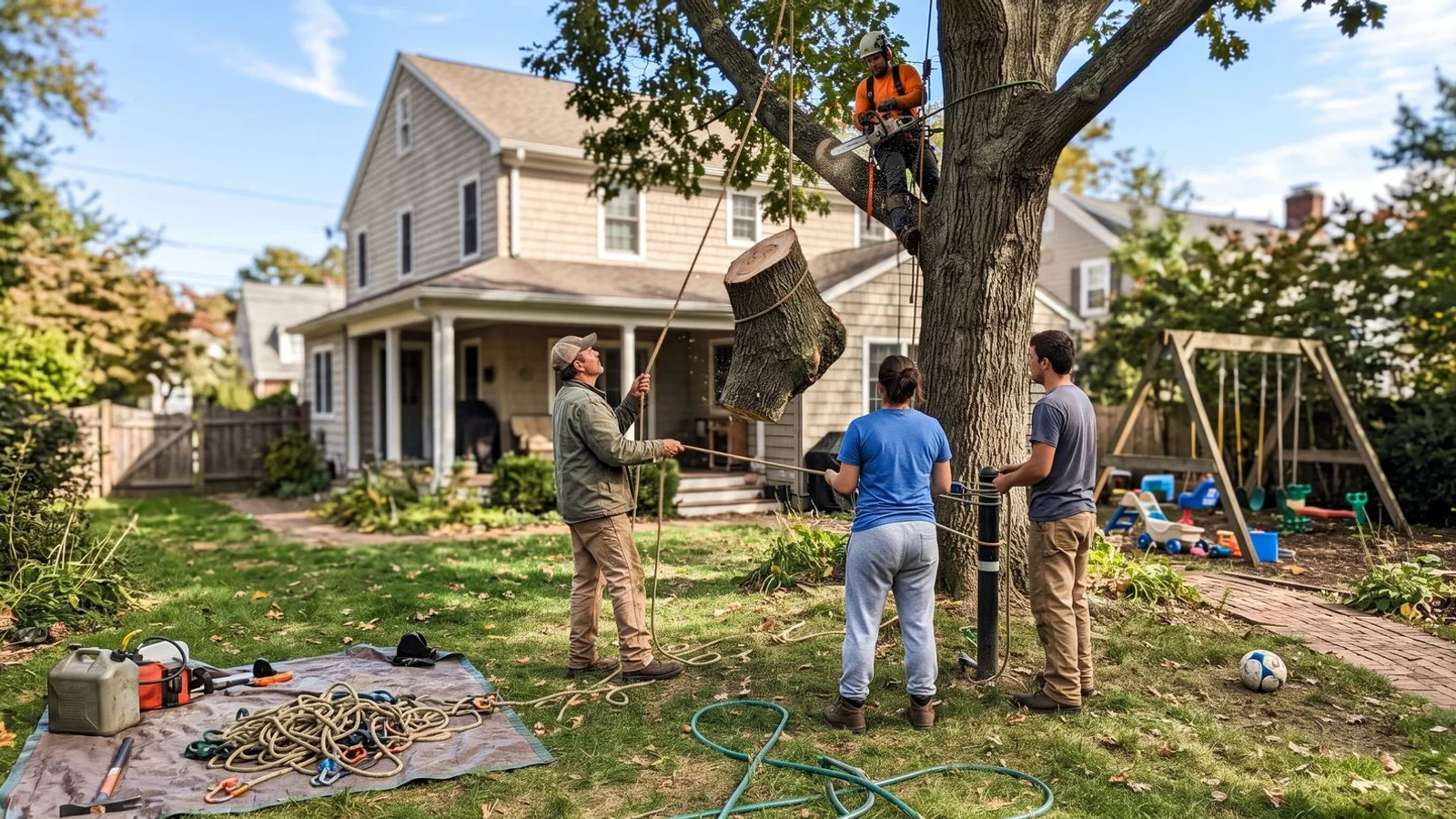
The Removal Day, Start to Finish
Arrival and setup. Crew arrives with the estimate, does a final walk with you, and confirms the plan. Setup includes parking the bucket truck and chipper, laying mats to protect turf, and clearing the work zone of personal items.
Rigging and sectioning. For anything larger than a small tree, we don’t just cut the trunk at the base and let it fall. Instead, a climber or bucket-truck operator sections the tree from the top down. Each section is either dropped controlled or lowered on ropes (“rigged”) to avoid landscaping and structures.
Utility coordination. If lines are close, we coordinate with the utility — sometimes de-energizing lines during the cut. This is scheduled ahead of time.
Final cuts. Once the crown is down, the trunk comes down in one or a few sections, usually toward a pre-cleared drop zone.
Cleanup and hauling. Chipper runs alongside the work, processing brush as it comes down. Larger chunks are loaded for haul-off. Rake pass, blow the driveway, and we’re gone.
Property Protection
Before the first cut, we protect what matters:
- Plywood and mats over turf where equipment or debris will land
- Protection for hardscape (patios, driveways, walkways)
- Coverings for gardens, ornamentals, and specimen shrubs near the drop zone
- Signage or barriers if the work zone extends onto sidewalks
This is included on every job — not a premium add-on.
Rigging Explained
“Rigging” means using ropes and pulleys to control how each cut section moves. Instead of dropping a 400-pound limb from 40 feet up, we lower it slowly to the ground on a rope. It’s slower, but it’s how we avoid roof damage, fence crushes, and turf ruts.
Complex jobs use multiple rigging points, portable winches, and sometimes a mini-crane. For very large trees or tight lots, a full crane-assisted removal lifts sections cleanly away.
Stump Options
After the trunk comes down, you have three choices for the stump:
- Leave it — cheapest, but ugly and slowly rotting
- Grind it — most common, mulch backfill included
- Fully remove it (roots and all) — required for construction; more expensive
Stump grinding is a separate line item ($100 to $600 depending on diameter). We can grind it right after the removal or come back on a scheduled visit.
Timeline Expectations
- Small tree: 2 to 3 hours on site
- Medium tree: 4 to 6 hours
- Large tree: most of a day
- Crane-assisted or complex: full day plus optional next-day cleanup
Add another 30–60 minutes if you’re grinding stumps at the same visit.
During the Work
You don’t need to be present, but you do need to be reachable. If we find something unexpected (internal decay, hidden hazard), we call before proceeding.
Keep pets and small children inside during the work. Cars should be moved out of the work zone and driveway if we’ve asked.
After
You get:
- A tidy property with the debris hauled off
- Final invoice matching the estimate (barring any change-orders discussed with you)
- Documentation for insurance if it was a storm-damage job
- Photos of any incidental turf impact so there’s a record
If we scheduled stump grinding for a separate visit, you’ll get that scheduled before we leave.
See our tree removal service for the full scope of work we handle, or read how much tree removal costs in Westchester before you book.