Storm-Prep Pruning to Prevent Limb Failure
How pruning reduces wind load and limb failure before nor'easters, the best timing, and why mature coastal Westchester trees benefit most. Book before storm season.
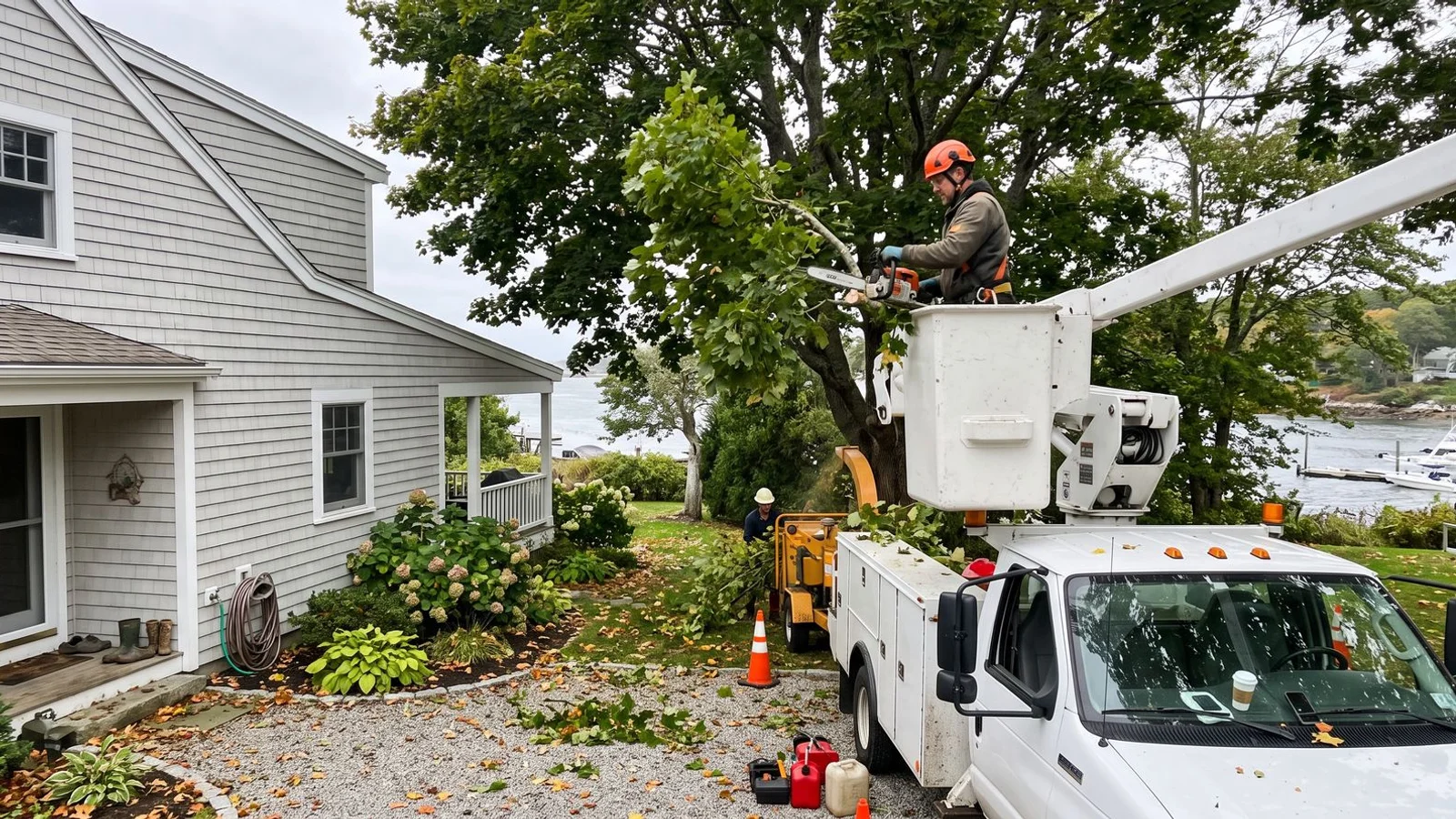
We often see property owners caught off guard when a sudden storm snaps a massive branch off their favorite shade tree, which is why storm prep tree pruning is so critical. The reality is that wind damage often begins at just 25 mph for trees with existing structural defects.
Proactive canopy care is usually the dividing line between trees that survive and those that fail.
Our team will break down exactly how wind impacts your trees and walk through the specific pruning steps that prevent catastrophic failure. Taking a few precautions now saves your property from expensive emergency removals later.
The Physics of Wind Damage
When wind hits a tree canopy, it creates drag proportional to the canopy area. A denser canopy catches more wind, forcing weak limbs to break under the immense pressure.
Our arborists focus on the two variables you can actually control to reduce wind load tree stress. Pruning targets these variables by decreasing the surface area and removing the specific branches most likely to fail first.
We know from structural arboriculture research that lowering a mature tree’s height by 20 percent can reduce its wind load by nearly 40 percent. Severe thunderstorms regularly produce 50 to 70 mph gusts across the US, turning a dense crown into a dangerous sail.
Our approach mitigates this risk by addressing the three main factors of storm damage:
- Canopy Density: A thick crown acts like a solid wall against high winds.
- Structural Defects: Weak attachment points cannot handle sudden gusts.
- Wind Speed Thresholds: University of Minnesota data shows damage begins at just 25 mph for compromised limbs.
What Storm Prep Tree Pruning Actually Does
Storm-prep pruning selectively removes interior branches to open up the canopy and eliminate weak attachment points. The goal is never to defoliate the tree, but rather to reduce its sail area and remove the limbs most likely to snap.
Our team focuses on specific structural improvements that prepare the tree for severe weather. You need to prune trees before storm season hits to ensure these precise cuts have time to heal properly.
We look for hidden dangers like co-dominant trunks with included bark, a severe defect where the wood fails to knit together. Catching these structural flaws early prevents splitting, which is why our standard preparation process includes several targeted techniques:
- Crown thinning: Selectively removing interior branches opens up the canopy without changing the tree’s natural outline.
- Reduction cuts: Shortening overextended limbs back to a lateral branch decreases the leverage wind can apply.
- Deadwood removal: Removing dead branches is mandatory because they will simply fall during the next major weather event.
- Weak union identification: Supporting or noting co-dominant leaders and V-shaped crotches prevents trunk failure.
- Weight balancing: Correcting unbalanced canopies that lean toward structures protects your property from directional falls.
Best Timing in Westchester
Late summer through early fall is the sweet spot for Westchester tree care. Booking your pruning between August and early October ensures the canopy is prepared before severe weather arrives.
Our crews prefer this window because trees are still actively growing, allowing pruning wounds to close cleanly and quickly. The foliage is also still on the tree, giving us a clear view of the entire canopy’s density and weight distribution.
We strongly advise getting on the schedule early, as storm season peaks with September hurricanes and nor’easters from October through March. Beating the post-storm rush guarantees your property is protected before the high winds start.
Special Timing for Oak Trees
Our schedule shifts slightly when dealing with mature oaks due to disease prevention protocols. Pruning oaks during the active growing season increases the risk of oak wilt infection.
We handle storm-prep for oaks during the late dormant season, typically from December through February. Careful timing ensures the tree is protected from both severe weather and deadly fungal pathogens.
Which Trees Benefit Most
Large, mature shade trees with heavy canopies and those planted near high-value structures require the most immediate attention. If you had storm damage last year and ignored the root causes, your property is highly vulnerable to repeat damage this year.
Our arborists prioritize specific species and locations that carry a statistically higher risk of failure. Coastal properties in Long Island Sound exposure areas like Larchmont, Mamaroneck, and Rye face intense, sustained gusts that test tree stability.
We also focus heavily on tree species known for producing brittle, weak wood as they grow rapidly. Identifying these high-risk trees early is the most effective way to prevent property damage before a storm hits.
| Tree Profile | Common Examples | Primary Risk Factor |
|---|---|---|
| Heavy Canopy Shade Trees | Oaks, Maples, Tulip Poplars | Catch massive amounts of wind, creating extreme drag. |
| Weak-Wood Species | Silver Maple, Willow, Bradford Pear | Fast growth leads to brittle branches that snap easily. |
| Coastal Exposure Trees | Any species near open water | Constant battering from high-velocity, salt-heavy winds. |
| Previously Damaged Trees | Trees with recent limb loss | Existing stress and compromised structural integrity. |
Our risk assessments always flag trees near power lines, homes, or high-value hardscaping for immediate evaluation. A proactive approach is far safer than waiting for a branch to crash through a roof.
What It Costs
Storm-prep pruning on a mature shade tree typically runs between $400 and $900, depending on the size, access, and required canopy work. Multi-tree residential visits offer much better efficiency, bringing down the cost per tree significantly.
Comparing Prevention to Emergency Costs
Our clients often ask how this upfront investment compares to the cost of cleaning up after a storm hits. Recent 2026 data from Angi shows that standard US tree removal averages $750, but emergency removal involving a crane and utility lines frequently exceeds $3,000.
We always emphasize that preventive care is a fraction of the cost of removing a massive, fallen trunk from your living room. A modest investment in pruning protects your home and preserves the value of your mature landscaping.
Our commercial and HOA clients often choose to bundle this preventative work into an annual maintenance contract with priority storm response included. This approach guarantees your property gets immediate attention if severe weather does cause unexpected damage.
Booking
We start filling our storm prep tree pruning slots in early July and typically book completely out by mid-August. Calling early is the only way to ensure your property is secured before the dangerous fall winds arrive.
Our early scheduling options give you the flexibility to spread multi-tree work over several visits if needed. A comfortable buffer before the storm season peak provides incredible peace of mind for property owners.
We strongly encourage you to secure your spot today by calling 914-907-4131 or by choosing to use the form. Proactive pruning keeps your property safe, beautiful, and ready for whatever the season brings.
Related Resources: