What Happens to the Ground After Stump Grinding
What your yard looks like after stump grinding: mulch backfill, settling, replanting or grass prep, leftover surface roots, and cleanup.
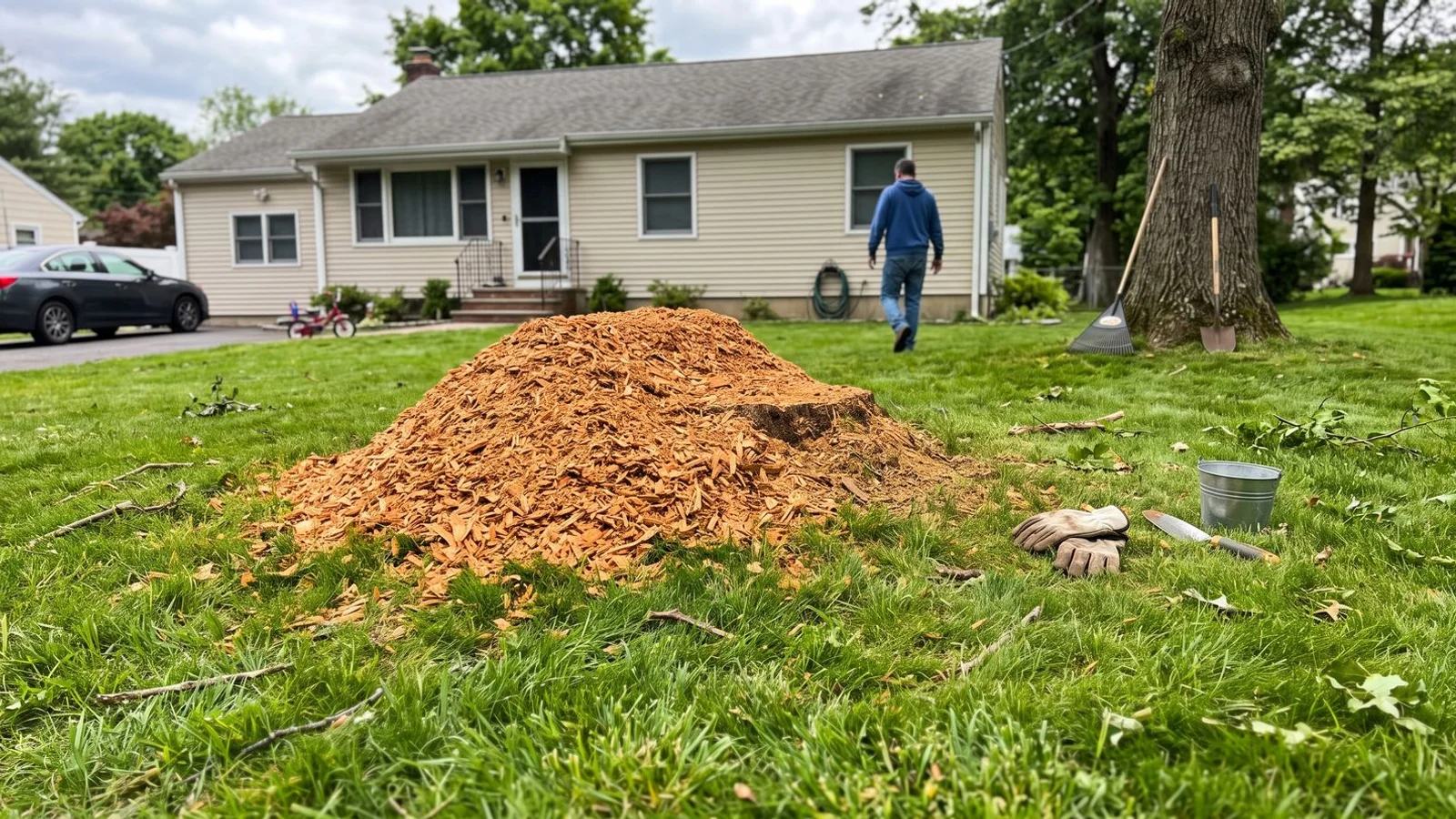
Many property owners are surprised by the state of the ground after stump grinding. Our professional service team sees this exact scenario every day across the US. The truth is that proper land restoration requires a few specific steps to prevent sunken spots and dead turf.
Wood chips left in the ground actively change the chemical balance of your soil.
Let’s look at the data on wood chip decomposition, what it actually means for your lawn, and explore practical ways to respond.
Immediately After Grinding
Right after the machine shuts down, you will see a mound of wood-chip grindings sitting where the trunk used to be. This pile rests in a slight depression created by the cut zone of the machine.
Our standard professional practice uses industry-grade equipment, like Vermeer or Carlton stump cutters, to grind 6 to 8 inches below the soil grade. That depth eliminates the visible hazard and makes room for fresh topsoil.
You can expect to find:
- A mound of wood-chip grindings replacing the stump.
- A slight depression around the mound indicating the cut zone.
- Scattered chips resting within a few feet of the main pile.
- Cleaned walkways and driveways after blowing the immediate area.
The total volume of these grindings often surprises people. Solid wood expands to two or three times its original volume once a machine pulverizes it into chips. These grindings are essentially fresh wood mulch mixed with native soil.
What to Do Next
You might be wondering, after stump grinding what next? You have three paths depending on what you want the spot to become. The specific preparation changes whether you prefer fresh grass, a shrub, or a replacement tree.
We highly recommend reviewing your options before spreading topsoil. The table below outlines the basic requirements for each path.
| Future Landscape Plan | Preparation Effort | Topsoil Required |
|---|---|---|
| Grow fresh grass | Moderate | 3 to 4 inches |
| Plant a small shrub | Low | Targeted backfill only |
| Plant a new tree | High | Extensive root clearing |
Grow Grass Over It
Raking out excess grindings is your first step for a healthy lawn. Fresh wood chips have a massive carbon-to-nitrogen ratio, often exceeding 300 to 1. This high ratio causes microbes to pull available nitrogen out of the soil to break down the wood.
Our teams advise applying a starter fertilizer to counteract this nutrient loss. A formulation like 16-28-12 pushes phosphorus for root development while replacing the stolen nitrogen.
Follow these steps for grass:
- Rake out the excess grindings to spread them thin as mulch elsewhere.
- Add 3 to 4 inches of fresh topsoil over the depression.
- Level the soil and seed with grass appropriate for your specific yard.
- Water the area regularly during the establishment phase.
Plant a Smaller Shrub or Ornamental
Shrubs adapt easily to areas with decaying organic matter, making planting after stump grinding highly successful. You still need to remove the bulk of the grindings from the immediate planting pocket.
- Scoop out the majority of the grindings from the target zone.
- Add fresh topsoil mixed with high-quality compost.
- Plant the shrub using normal planting techniques.
- Mulch around the base using the leftover grindings.
Plant a New Tree in the Same Spot
Putting a large tree back into the exact same hole presents a major challenge. Leftover roots make hand-digging exceptionally tough and block new root expansion.
Our experts suggest evaluating full stump and root removal instead of basic grinding for this scenario. That process clears the entire subterranean space. If removal is not an option, you should plant the new tree a few feet to the side of the old trunk.
Settling Over Time
Grindings compress and decompose over 6 to 18 months. Expect some natural settling during this period.
Average stumps usually leave a depression of 1 to 3 inches as the material compacts. Very large stumps will drop even further as the wood breaks down.
Our crews always suggest topping off the area with additional topsoil to maintain a level grade. The specific rate of decomposition depends heavily on local moisture levels and the original wood species.
Typical decay timelines based on species:
- Softwoods (Pine, Poplar): Break down quickly, usually within 3 to 5 years.
- Hardwoods (Oak, Maple): Decay much slower, sometimes taking up to a decade to fully compost underground.
Leftover Roots
Grinding takes out the stump and the top few inches of the root flare. The lateral roots extending under your lawn stay firmly in place.
These hidden pathways decay naturally over many years. They rarely cause structural problems for standard turf lawns.
We do see specific exceptions where lateral roots require intervention. Certain aggressive suckering species will panic after grinding and send up dozens of new shoots.
Pay attention to these unique situations:
- Suckering species: Trees like aspen, sumac, and tree of heaven require a systemic herbicide like Triclopyr applied 30 days before cutting to prevent rampant suckering.
- Excavation nearby: Digging for new foundations or pools may expose the remaining root system.
- Landscape hardscape work: Installing patios or edging in the same footprint usually demands mechanical root extraction.
When Grass Won’t Grow Well
If grass struggles in the grinding area, the soil chemistry or structure is usually to blame. Wood grindings alone do not contain the nutrients required to support healthy turf.
Our soil tests frequently reveal severe nitrogen deficiencies directly over old stump sites. The decomposition process temporarily strips available nitrogen from the surrounding dirt.
Troubleshoot your bare patches by checking these four factors:
- Not enough topsoil: Grindings offer zero nutritional value; add 3 to 4 inches of real soil.
- Nutrient tie-up: Decomposing wood pulls nitrogen; apply a starter fertilizer like 16-28-12 during establishment.
- Too much shade: Was the original tree shading the spot? Your grass selection might need an adjustment for the new sun exposure.
- Water pooling: If the ground sinks as chips rot, level it with fresh dirt before seeding again.
Timeline for Full Restoration
The timeline for full restoration stretches from the first day of seeding to the final integration of the lawn. Your initial actions dictate how quickly the ground recovers.
We tell property owners to expect a two-year journey before the spot vanishes completely. Follow this standard schedule to track your progress.
- Week 1: Complete the grinding, apply topsoil, and lay your seed.
- Weeks 2 to 6: Watch the grass germinate and establish while watering regularly.
- Months 3 to 6: The grass fills in, and you may notice the first signs of settling.
- Months 6 to 12: Monitor the grade closely and top off with soil as needed.
- Year 2: The restored patch should be completely indistinguishable from the surrounding lawn.
For professional grinding support, call 914-907-4131 or reach out through our contact form.
Related: stump grinding service, stump grinding cost per stump, tree planting.