Emerald Ash Borer: Signs and What to Do
How to spot emerald ash borer on your ash trees, the treatment vs. removal window, the risk to nearby trees, and when to book an inspection.
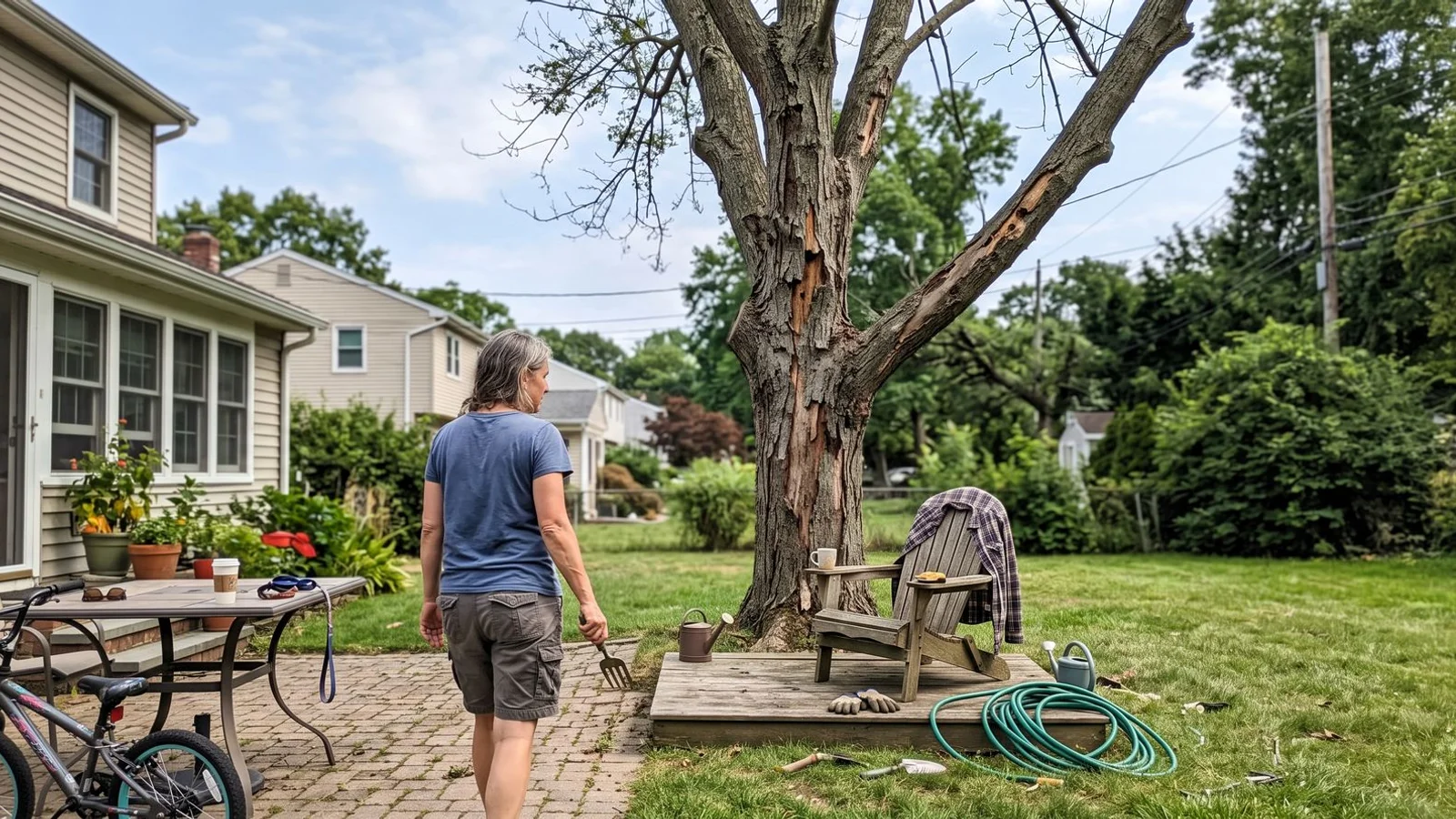
The Situation in Westchester
We have seen this play out time and time again in local backyards.
The Emerald Ash Borer crisis is no longer just a looming threat. Ash trees make up roughly 15% to 20% of the tree canopy in Westchester County alone.
Our team considers the “wait and see” approach to be the most dangerous choice a property owner can make today. You need a clear plan for emerald ash borer treatment Westchester properties can rely on before these trees become hazardous. Let’s look at the actual data behind these infestations and explore the exact methods to protect your landscape.
Identifying Ash Trees
We always start by confirming the exact species before jumping to any conclusions. Proper identification is your crucial first step in spotting emerald ash borer signs. The most common varieties in New York are white ash (Fraxinus americana) and green ash (Fraxinus pennsylvanica).
Our arborists look for a few very specific botanical features during a routine inspection. You can easily check for these same markers in your own yard. Look closely at the leaf structure and bark texture to confirm.
- Compound leaves: Look for groups of 5 to 11 leaflets on a single stem.
- Opposite branching: Twigs and branches will grow directly across from each other in pairs.
- Diamond-patterned bark: Mature trees display a distinct ridged pattern.
- Ash “keys”: These narrow winged seeds hang in clusters during the fall.
Signs of EAB Infestation
We divide the infestation timeline into three distinct stages to assess the real danger level. A 2026 field study shows that spotting the damage early gives you the best chance of saving the plant. The signs become much more obvious as the larvae feed under the bark.
Our inspections focus heavily on the upper canopy during the first two years of attack. Small changes up high are often the very first indicator of a problem. Watch closely for the initial clues of beetle activity.
Early (year 1 to 2) signs include:
- Upper-canopy dieback where leaves at the top turn yellow or thin out.
- Sparse leaf coverage compared to neighboring healthy trees.
- Occasional D-shaped exit holes measuring about 1/8 inch across.
- Woodpecker activity increasing as birds hunt for larvae.
We notice severe decline as the infestation enters the middle phase. The tree begins to starve as vascular tissue gets destroyed by the bugs. Damage accelerates rapidly during this window.
Progressing (year 2 to 4) signs include:
- Significant canopy loss dropping between 30% and 70%.
- Bark splitting vertically along the main trunk.
- S-shaped galleries becoming visible under peeled bark sections.
- Basal shoots or epicormic sprouts growing directly from the lower trunk.
Our crews must act quickly when a tree reaches the final stage of decline. Structural integrity plummets rapidly once the vascular system fails completely. By the late stage, removal is the only safe option left on the table.
Late (year 4 and beyond) signs include:
- Nearly full defoliation across all branches.
- Bark falling off in large sheets.
- Deep trunk splitting.
- Complete tree death.
Treatment Window
We recommend trunk injections only when the tree meets specific health criteria. Research from 2026 confirms that systemic insecticides like Emamectin Benzoate boast a 99% success rate when applied correctly. The most effective way to save ash tree EAB targets is to inject this chemical directly into the active vascular system during the spring season.
Our technicians use specialized tools with multiple injection ports to ensure even distribution. You must commit to repeat treatments every two to three years for this to work. It is never a one-time fix.
To preserve an ash tree, these conditions must apply:
- The tree currently has under 30% canopy loss.
- The trunk diameter falls within the safe treatment range.
- The tree holds significant value as a specimen, historic feature, or shade provider.
- You are ready for an ongoing maintenance commitment.
Cost Comparison
We tell clients to weigh the long-term financial impact before making a choice. Treatment costs range from $200 to $800 per tree every couple of years. Removal is a one-time expense that typically costs between $500 and $3,000 for a standard yard.
Our pricing data from 2026 shows that removing massive ash trees can spike up to $4,000 if crane rentals are required. Urban lots with tight access and nearby power lines always push the final bill higher. The smart move is to remove marginal trees and only treat highly valued shade trees.
| Option | Average Cost | Frequency | Best For |
|---|---|---|---|
| Trunk Injection | $200 to $800 | Every 2 to 3 years | High-value, healthy shade trees |
| Standard Removal | $500 to $3,000 | Once | Dead or dying trees in open spaces |
| Complex Removal | $1,500 to $4,000+ | Once | Trees near power lines or structures |
Timing Matters
We cannot stress enough how dangerous a dead ash tree becomes over time. A 2026 arboriculture study warns that dead ash wood shatters unpredictably under minimal pressure. The force required to break a five-inch dead limb is roughly the same as breaking a one-inch healthy branch.
Our emergency removal teams see catastrophic trunk failures happen as early as 14 months after a tree dies. These sudden collapses create massive property damage during routine winter storms. Insurance policies might even deny your claim if you ignored a known dead tree.
Why delaying removal is a bad idea:
- The beetle kills vascular tissue and structurally weakens the core.
- Dead ash becomes brittle and snaps without warning.
- Emergency removal costs soar if a crane is needed for a fragile trunk.
- Falling limbs pose a severe risk to people and property.
What to Do This Week
We urge you to take immediate action if you suspect an infestation on your property. Early detection saves both your landscaping and your wallet. You can follow a simple checklist to get started today.
- Identify your ash trees by looking for compound leaves and opposite branching.
- Inspect the upper canopy for early signs of dieback or D-shaped holes.
- Book an arborist assessment if any warning signs are present.
- Make a firm decision to treat or remove the tree before the wood becomes brittle.
Our scheduling team can usually get an expert out to your property within a few days. Prompt action guarantees you have the most options available. Waiting will only limit your choices to an expensive removal.
Preventive Treatment on Healthy Ash
We highly suggest proactive measures for any prized ash trees showing no symptoms yet. Preventive trunk injections can protect your tree before the local beetles even arrive. This strategy is incredibly effective in known infestation zones like Westchester County.
Our clients often pair this approach with a broader landscape health plan to build strong root systems. Protecting your canopy now preserves your property value.
You can secure your property for decades to come.
Here are the main benefits of acting early:
- Preserving the aesthetic appeal of your yard.
- Avoiding the high costs of emergency removals.
- Keeping your family safe from falling branches.
We urge you to reach out to our team today to map out a clear preservation strategy. Early intervention makes all the difference. Your trees are worth the investment.
Related: common tree diseases in Westchester, when to call a certified arborist, tree health assessment.